The recorder is the first piece of equipment generally purchased for field recording, and there are many models to choose from, each with its own qualities and shortcomings. Each device is designed for a different workflow, and here I review the ones I’ve chosen after several years of testing the market standards. You will find my tested field recorders, used in the field over a long period of time.
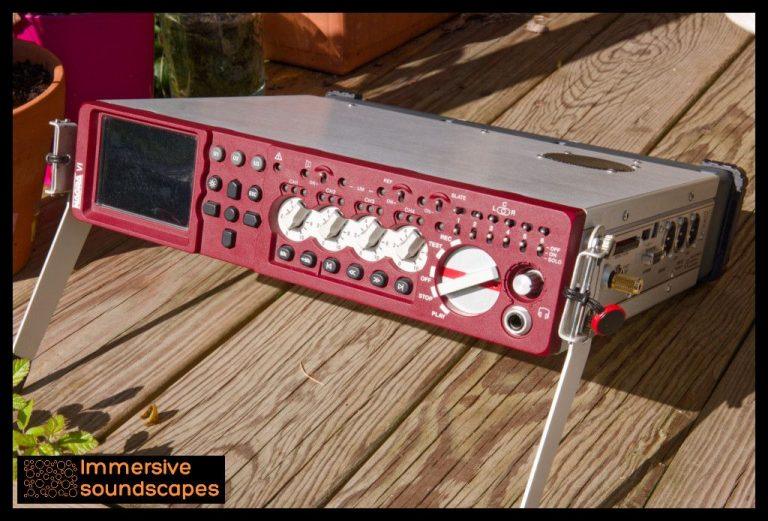
Nagra VI
An opportunity came up that got me thinking a lot. It was an expensive machine, but it represented the ultimate achievement of Nagra in digital recording.
Compared to the SEVEN, there are four preamps and four inputs (AES or line), for a total of eight possible inputs, which makes it suitable for advanced comparative testing in the studio, outputting AES to my RME Fireface.
Let’s talk about the preamps… their special feature, which is rarely mentioned, is that they are equipped with transformers (which can be disabled) that add something extra to the sound, something difficult to describe but which gives it more presence and clarity. When disabled, you get the sound of the Nagra Seven.
The menus are extremely easy to use and the main functions are accessible on the front panel. Ultimately, it’s a very simple device to use, and that’s its strength: you can’t go wrong. The headphone output is exceptional and reproduces all the nuances of the recorded sound. I find myself plugging it in to listen to nature without recording, just to enjoy.
It’s a heavy and expensive device, but it serves as my sound reference. It brings out the quality of the microphones you plug into it. You can clearly hear the difference between each microphone, and the transformers add a certain mojo to the sound.
Studio sound reminiscent of a Neve console — but portable.
Nagra SEVEN
I dreamed about this device for a long time, even hunting for it second-hand on every website I knew. It took me three years before I was able to buy one that belonged to Fernand Deroussen, whom I still thank (naturo-phonia.com).
It’s much better than the Nagra LB, with a truly incredible headphone output, amazing sound, a well-designed touchscreen menu, and everything you’d expect from this type of device, including good battery life.
It’s a device with incredible charm, designed for stereo recording. Just plug it in, press record, and you’re good to go.
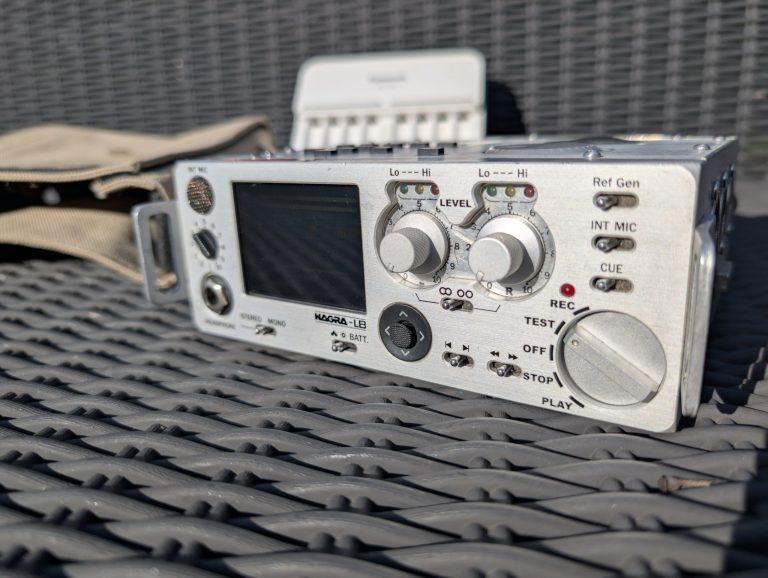
Nagra LB
Nagra is the brand behind field recording, which began with its first tape recorders. It is known worldwide for its impeccable sound quality, durability, and, of course, its price. These devices have accompanied journalists around the world to capture history.
I immediately felt comfortable with it because, like all professional devices, there is no need to go into the menu to find what you are looking for, and the functions are accessible via intuitively placed buttons—nothing is left to chance. Here, the word “quality” takes on its full meaning.
This is my first Nagra, and I now understand what makes this brand so renowned. The sound quality lives up to the brand’s reputation, superior to that of Zoom and Sound Devices Mixpre devices, with truly breathtaking sound depth and realism.
The LB’s headphone output, on the other hand, is average, with little bass and a noticeable hiss. I don’t know if this is specific to my device, but it’s the only negative point, and not a minor one at that.
Sound Devices Mixpre 3/6
I couldn’t pass up the opportunity to try out the Sound Devices Mixpre, a recorder that has attracted a lot of attention for its quality and ease of use, making it a compact, quasi-professional device, albeit at a rather high price. It accepts both XLR and PIP microphones, making it very versatile and robust.
Its price is justified by its excellent sound quality, its high-quality headphone output, and its fairly flat design, which makes it easy to fit in a bag.
Points that could be improved in a new version would be: – The enormous power consumption, which requires the use of an adapter for two NP-F batteries or a USB power bank, even though I don’t like using it for fear of damaging the USB port. – The XLR connector locks that block certain cables. This has never happened to me with Neutrik connectors, but it’s a recurring issue among users. – The screen is a little small for navigating the menus.
Zoom F3
The Zoom F3, with its 32-bit floating point recording capability, is a real best seller in field recording. Everything has been said about this device, which works perfectly as a versatile tool that “almost” fits in your pocket. You can take it with you on trips without any problems, set up drop rigs, and more.
The preamps have been greatly improved compared to the H version (H5, H6, H8, etc.). It’s the ideal tool for getting started with quality equipment.
There are still a few things that bother me and that could make it truly top-notch: – No built-in battery, so you need to have a battery charger with you when you’re on the go. – A mediocre headphone output that doesn’t do justice to the recorded sound. – The USB port power supply is not filtered, so there is a high risk of humming or noise of all kinds. – Navigating the menus with these small buttons… – The format is a little thick.
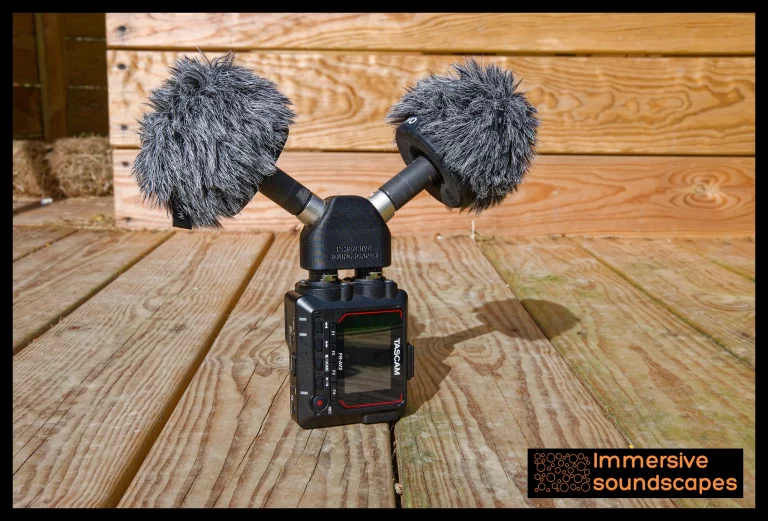
Tascam FR-AV2
What can I say? When it came out, I immediately thought it would replace my trusty DR100, but that wasn’t the case at all. I even had a bad experience with this device, which I hardly use anymore.
The promise was great: 32-bit floating point, color screen, timecode, XLR and pip input, Bluetooth headphones.
After a short time, I realized that it fell well short of my expectations: – Plastic case – Cumbersome menus with tiny buttons – No battery, so you need a battery charger. And worst of all, within a few weeks, there were loose connections on the XLR inputs and headphone output, which made it unusable outdoors. The ZWEE connectors are of poor quality and fragile; the mini jack connector broke within two weeks (even though I’ve been using my DR100 every day in the workshop for five years without any problems).
A big disappointment despite the sound quality, which is its strong point.
Tascam DR100 mkIII
The Tascam DR100 mk3 is one of the most underrated recorders. Tascam is a long-established brand in the world of studio and portable recording, dating back to the first portastudio that made multitrack recording accessible to a wider audience. The DR100’s recording quality is incredible. The sound is clear, refined, and rich in detail, with low background noise, all in a highly portable format.
Its XLR inputs (48V Phantom) give it the best performance, opening up the possibility of using high-end professional microphones. The DR100 is also equipped with a high-capacity internal battery, which is very convenient when traveling or when you don’t need an extra battery charger. It can also be used with 2 AA batteries to extend its battery life.
A device designed to last, with a metal casing that will serve you well for many years. It is one of my favorite recorders, and has become the one I use in the workshop to test microphones, thanks to its simplicity and quality.
UPDATE: I’ve been using mine every day for 5 years to test all my microphones, and it works like new. The battery still works too. I highly recommend it. It’s the best value for money I’ve tested, but unfortunately it’s no longer available new, so you’ll have to find it second-hand. My comments only apply to the MKIII version.
SQN mixers: 3M, 2S & 4S IVe
The SQN mixers have been used by countless journalists and sound engineers around the world… you’ve probably heard the SQN sound without even knowing it! The first version was designed to give Nagras more gain, with the same attention to quality.
Designed to withstand the most difficult conditions. Its exceptional quality preamps are the ideal complement to your favorite recorder or when you’re looking for a rich sound with a lot of presence. These mixers also have a lot of headroom and are difficult to saturate. The built-in analog limiter is often considered one of the best on portable voice equipment.
The only drawback is the weight, as it’s built like a tank, but I still get that wow effect when I use it, with a natural and rich sound.
Sonosax SX-M2D2
This small box is solely a preamplifier, a true Swiss Army knife, and fittingly, it is made in Switzerland…
Analog preamplifier, AES42 digital preamplifier, excellent headphone amplifier, AES3 inputs and outputs… its construction is uncompromising and its qualities are as high as those of NAGRA. The sound delivered by this pocket preamplifier is incredible, and it has become one of my main preamplifiers that I use when I’m looking for maximum quality.
Paired with the Tascam via an SPDIF digital connection, I have an ultra-high-end and decidedly portable combo. Soon it will be joined by a Lectrosonics SPDR recorder to free up my Tascam, which I use every day in the workshop.
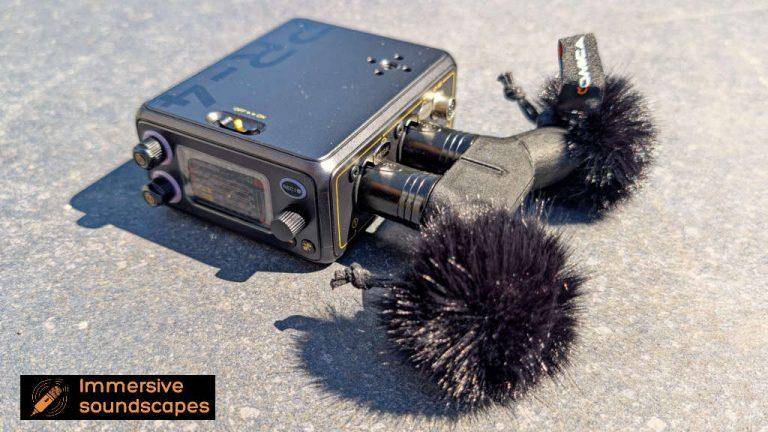
Deity PR-4
I’m still testing and getting the hang of this device, which has some interesting features—notably the ability to record in AES, 32-bit floating-point, and the inclusion of internal memory. These are a few features that set it apart from the most well-known recorders on the consumer market. The build quality seems good, despite the knobs feeling a bit flimsy and the Chinese-brand XLR connectors, but I’ll be testing it over time to provide a more detailed review in the coming weeks.
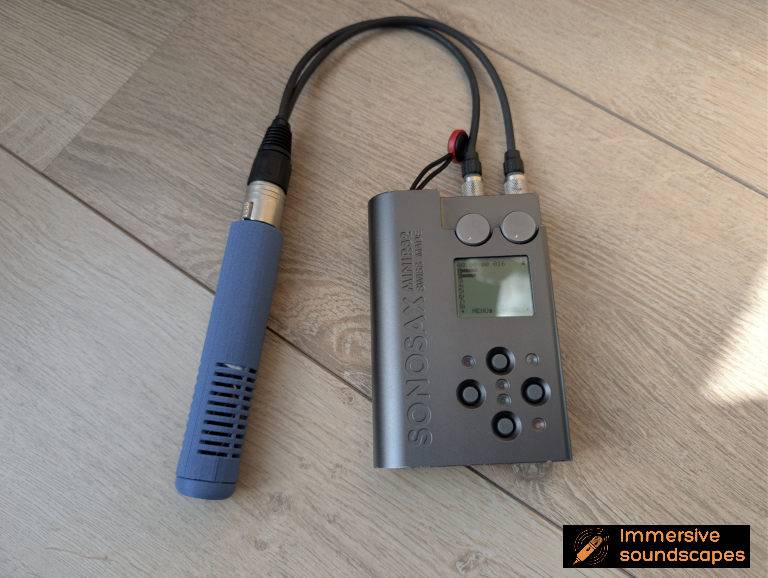
Sonosax MiniR82
This is my new favorite field recorder for travel; it has already accompanied me on several trips abroad without a hitch. The build quality is on par with the sound quality. It features an all-metal body and breathtaking sound—both precise and smooth. Although it might seem a little intimidating at first glance, it’s actually easy to use thanks to its well-thought-out design. It can also record 8 digital tracks (AES) simultaneously, in addition to its two top-of-the-line analog preamps.
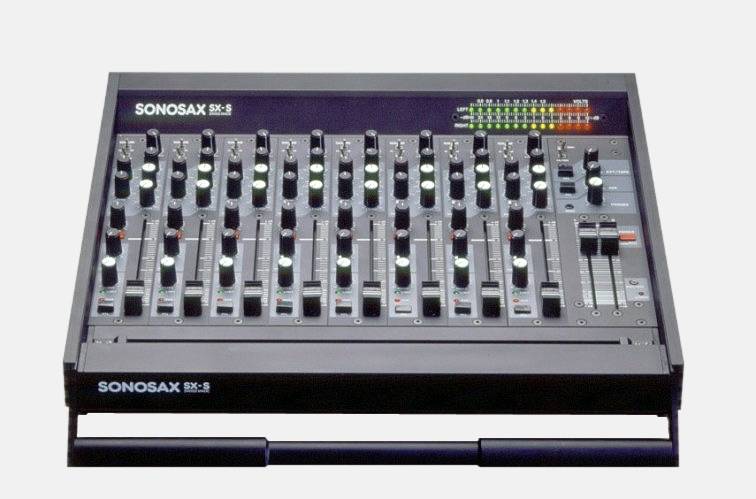
Sonosax SX-S analog mixer
Here we see the simplicity and efficiency of Sonosax in a super-compact mixer; it’s battery-powered for portability and even comes with a carrying handle. Six analog channels from the ’90s… Still relevant today thanks to their low noise and dynamic range. All the knobs have been working flawlessly for 30 years.
Some links on this page are affiliate links to Thomann.de. If you buy through them, I earn a small commission that helps keep this website running — at no extra cost to you. You’re free to buy wherever you like, and I encourage you to compare prices across several shops. I chose Thomann because I’ve bought most of my own equipment there and never had a problem.